

Dental Crowns in Wheaton, IL:
A Patient’s Guide
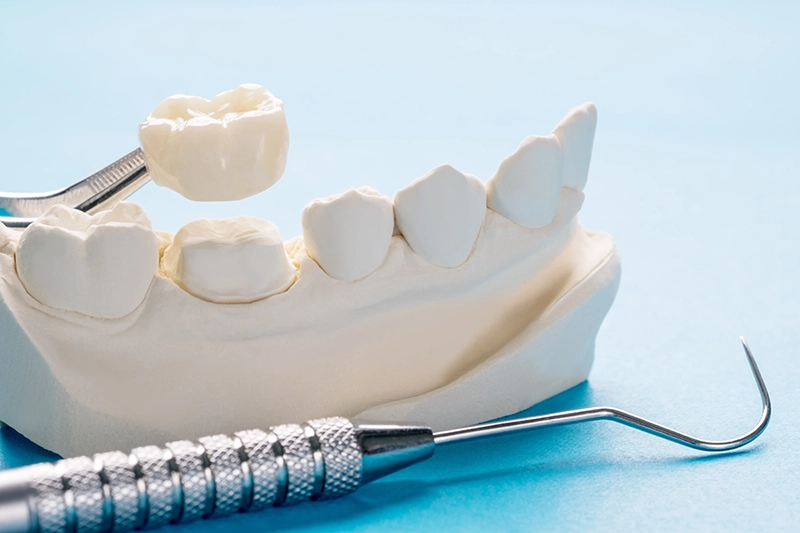
Dental crowns in Wheaton, Illinois, restore strength, shape, and appearance to damaged teeth so you can chew comfortably and protect your smile. This page from our team explains when crowns are recommended, how the procedure works, material choices, and how to care for your restored tooth.
Dental Crowns Explained
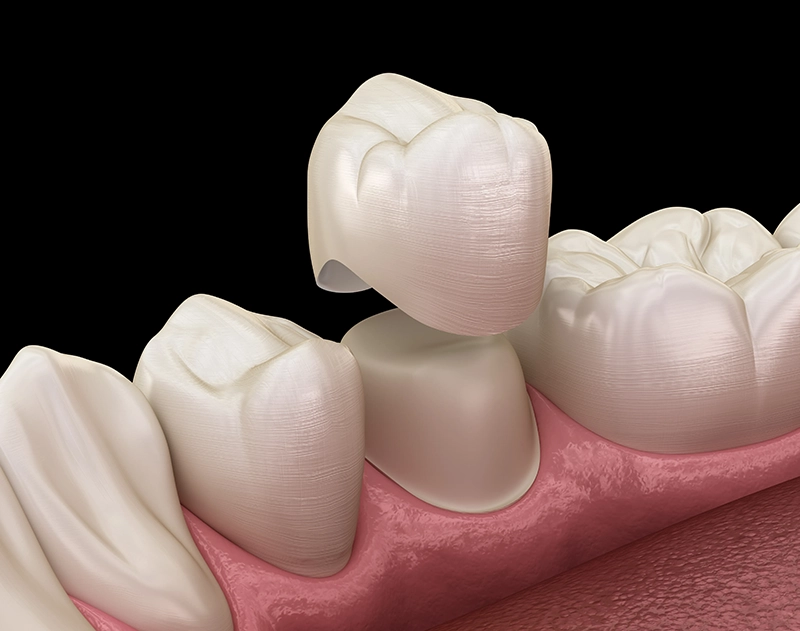
A dental crown is a custom-made cap that fully covers a tooth above the gumline. It is used when a tooth is too weak or worn for a filling to last. Common reasons include a cracked or fractured tooth, a large cavity, a tooth that has had a root canal, severe wear from grinding, or to complete a dental implant or support a bridge.
Benefits of Dental Crowns
- Strength and protection for weakened or cracked teeth.
- Improved chewing comfort and bite alignment.
- Natural-looking color and shape for a confident smile.
- Durable solution that can last many years with proper care.
- Versatility for single teeth, implants, and bridges.
The Dental Crown Process
The crown process is straightforward and occurs over one or two visits depending on the technique used. First, an exam and X-rays confirm that a crown is the right choice and that the tooth and roots are healthy. Numbing keeps you comfortable during treatment.
The tooth is shaped to make space for the crown. Digital scans or impressions capture precise details for a secure fit. A temporary crown usually protects the tooth while the lab crafts your final restoration. At the follow-up, the temporary is removed, the fit and bite are checked, and the new crown is bonded in place.
What to Expect
Mild sensitivity to temperature or pressure for a few days is common and usually fades on its own. If a temporary crown is placed, treat it gently—avoid sticky foods and chew on the opposite side.
Crown materials include porcelain for a natural look, zirconia for durability, porcelain-fused-to-metal for strength and aesthetics, and gold or metal alloy for back teeth. Our dentist will help you choose based on location, bite forces, and appearance goals.